
Thinking about a control system upgrade for manufacturing but unsure where to start? Here’s a practical guide for plant managers and operations leaders.
When you start thinking about upgrading your plant’s control system, it can feel like opening a can of worms. Are you facing signs of obsolescence? Planning to install new equipment? Or simply tired of troubleshooting the same outdated panel and repeatedly changing outdated parts with used parts?
No matter the trigger, a control system upgrade can bring long-term stability, improved safety, and better visibility into operations—if it’s planned and executed correctly. Here’s what plant managers and operations leaders should know before starting.
Why Consider an Upgrade?
Control system upgrades are often driven by:
-
- New equipment integration (like a palletizer or inspection system)
- Aging PLCs, HMIs, or VFDs that are difficult to source parts for
- Recurring downtime from hard-to-trace electrical issues or non-existent documentation
- Limited alarming or diagnostics, making troubleshooting harder
- Poor, or no visualization into the process
In many of the plants, the system still “works” but is holding the line back. Operators can’t see what’s happening, alarms are unreliable, or basic maintenance tasks require too many workarounds.
What Does the Process Involve?
Upgrades typically include some combination of:
- PLC and HMI programming
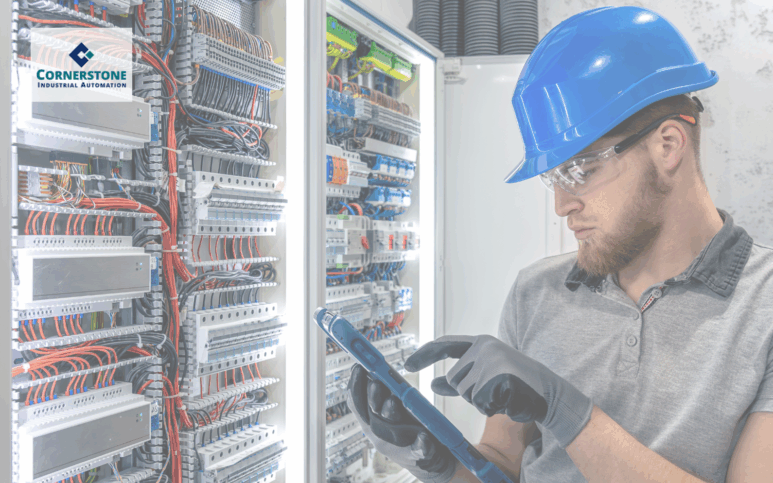
- Control panel rewiring or building a new panel
- Integration with new or existing equipment
- Servo motors, drives, sensors and instrumentation
- Commissioning, testing, and operator training
It may also involve coordinating with OEMs, electrical contractors, or in-house maintenance staff. In some cases, like the Sunny Sky packaging line rework, Cornerstone acts as both the controls integrator and a project manager, helping align contractors, equipment vendors, and the client’s internal team.
What Should Be Ready Before Work Begins?
To avoid delays, it helps to have:
- A clear scope or equipment list
- Updated line drawings or electrical prints (or at least access to what exists)
- A point of contact who can answer day-to-day questions
- A window of time where access to equipment is possible (weekends or holidays are common upgrade windows)
If your plant’s documentation is out of date or incomplete, that’s okay, a good integrator will help you fill in the gaps.
Common Upgrade Outcomes
While every plant is different, here are common benefits Cornerstone clients experience after a control system upgrade:
- Reduced downtime and faster recovery from faults
- Improved operator visibility with updated HMIs and real-time alarms
- Cleaner panel layouts and labeled wiring, which make maintenance easier
- Room to grow with documented, scalable PLC programs
“Sometimes the biggest win is just getting a system back to being reliable and easy to operate. You shouldn’t need a senior engineer to restart your line after a trip,” Alan Ferrin, President of Cornerstone Automation.
Final Thought: Upgrades Don’t Have to Be Overwhelming
With the right partner, control system upgrades don’t have to mean extended downtime or complicated vendor wrangling. At Cornerstone, we often come in during moments of urgency or change—but we always work to keep things practical, cost-justified, and plant-floor focused.
If you’re thinking about a controls upgrade, let’s have a quick conversation. We’ll walk your line, ask the right questions, and help you build a clear path forward.
Related Case Studies: